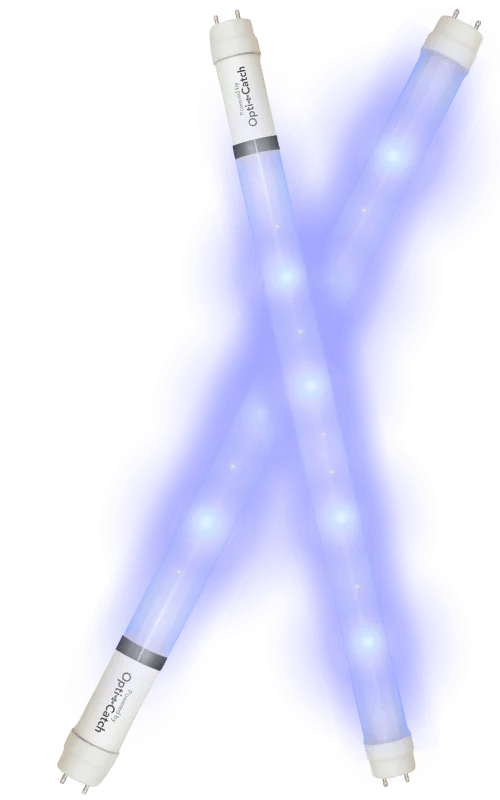


How Often Should I Replace LED Lamps in Insect Traps Under BRCGS?
As food sites transition from fluorescent to LED insect trap lamps, many are questioning whether annual lamp replacement is still necessary under BRCGS.
This article explains how BRCGS focuses on effectiveness rather than fixed replacement intervals, why LED lifetimes differ from fluorescent technology, and what auditors expect to see in terms of manufacturer validation, service records, and ongoing performance monitoring.

For decades, pest controllers and food sites have worked to a simple rule of thumb:
Fluorescent insect trap lamps = change them every year.
That made sense when fluorescent was the only option. But as the industry moves towards LED insect trap lighting, that one-size-fits-all approach is being questioned – especially in the context of BRCGS requirements.
In our webinar with food manufacturers, and conversations with pest controllers managing audited sites, one question keeps coming up:
If my LED lamps are rated for three years, do I really have to change them every 12 months for BRCGS?
The short answer: no, not if you can prove they are still effective and you have the manufacturer’s data to back it up.
What BRCGS Really Cares About: Effectiveness, Not Habit
In our webinar, Kim Stilwell (Technical Manager, Food) at BRCGS clarified how the standard should be interpreted when it comes to lamp replacement:
The requirement isn't about changing lamps every year; it's that they're effective. If you can show the manufacturer's data sheet that it's a 3 year life cycle, that should be sufficient for an auditor.
That one statement captures the shift in thinking the industry now needs:
BRCGS does not mandate a fixed, annual change for every lamp type.
What matters is that the lamps are effective for pest control and that you have evidence to support your replacement interval.
In other words, the standard is performance-based, not habit-based.
Hear the explanation of BRCGS requirements in this webinar clip:
Fluorescent vs LED: Why the “Annual Change” Practice Emerged
The historic annual replacement guidance grew up around fluorescent technology:
- Fluorescent lamps suffer from faster UV degradation
- After around 12 months’ use, the UV output drops enough that catch performance can be compromised
- An annual change became a simple, conservative way to ensure traps stayed effective.
That logic still applies for fluorescent today. If you’re running fluorescent insect trap lamps, an annual replacement cycle remains good practice.
But LED behaves differently.
LED Lamps: Longer Validated Lifetimes
Modern retrofit LED lamps for insect traps are typically designed and validated for much longer lifetimes than fluorescent, often up to three years in normal operating conditions.
That means:
- The UV output and overall performance are designed to remain within spec for the stated lifetime.
- Manufacturers can provide test data and technical data sheets to support that claim.
- Changing these lamps annually can mean unnecessary cost and waste, with no audit benefit if the lamps are still effective.
This is why BRCGS requirements are increasingly being interpreted in the context of validated LED lifetimes, rather than fluorescent-based habits.
What Auditors Expect to See
So if you’re using LED, what will an auditor actually look for?
1) Evidence from the manufacturer
A technical data sheet or specification that states the rated lifetime (e.g. three years) for the LED lamp.
Ideally, this should reflect realistic operating conditions for insect traps (hours per day, environment, etc.).
2) Consistent, documented practice on site
Clear records showing when lamps were installed, and when they are scheduled for replacement.
Internal procedures or pest control contracts that align with the manufacturer’s validated lifetime.
3) Ongoing assurance of effectiveness
Visual checks during routine pest control visits (e.g. lamps operating correctly, no physical damage).
Monitoring data (e.g. catch rates, pest trend analysis) that supports the conclusion that the system is working as intended.
If you can demonstrate those three things, an auditor has a clear line of sight from manufacturer validation → site procedure → real-world performance.
The Role of Your Pest Management Provider
BRCGS also recognises that sites can’t be experts in every technology. That’s why Kim emphasised the importance of working closely with your pest management specialists.
In practice, that means:
Your pest control company should:
- Understand the specific LED products being used
- Have access to the manufacturer’s validation data and lifetime claims
- Build appropriate replacement intervals into the service contract
You, as the site, should:
- Make sure your internal documentation (SOPs, pest control procedures) reflects those intervals
- Keep copies of data sheets and correspondence on file
- Be ready to explain the rationale to an auditor: “We follow the manufacturer’s validated three-year life, and here is the evidence.”
This shared responsibility makes it much easier to justify not changing LED lamps annually while still demonstrating full compliance.
Practical Steps to Align with BRCGS When Using LED
If you’re transitioning from fluorescent to LED, here’s a simple checklist to bring your documentation and practice in line with the expectations discussed in the webinar:
1) Gather your technical data sheets
For each LED lamp type in use, obtain the latest manufacturer data sheet stating rated lifetime and conditions.
2) Update your pest control documentation
Adjust your SOPs and pest specifications so they refer to “manufacturer’s validated lamp life” rather than an automatic 12‑month change.
Clearly distinguish between fluorescent (annual change) and LED (3‑year or product-specific interval).
3) Align service contracts
Ensure your pest control provider’s service schedule reflects the same replacement intervals and keeps records for you.
4) Strengthen your audit trail
Keep copies of:
- Data sheets
- Service reports
- Internal procedures
Make sure installation and replacement dates are traceable for each trap or area.
5) Review performance periodically
Use pest monitoring data (catch rates, trend analysis) to confirm that your LED traps remain effective throughout the stated lifetime.
If performance drops earlier than expected, review the interval and adjust if needed.
Clear Guidance for Your Teams
The key message to share internally - especially with QA, technical, and sustainability teams - is simple:
For fluorescent:
- Continue with annual lamp changes as standard, and document them.
For LED:
- Do not blindly follow an annual schedule.
- Do follow the manufacturer’s validated lifetime, backed by data sheets and service records.
- Be prepared to demonstrate both effectiveness and evidence to auditors.
By shifting from a “we always change lamps every 12 months” mindset to an evidence-based, technology-aware approach, you stay aligned with BRCGS expectations, avoid unnecessary cost and waste, and make better use of what LED can offer.
Ready to Review Your Lamp Replacement Policy?
If you’re rethinking how often you replace insect trap lamps – especially as you move from fluorescent to LED – our team can help.
We can provide detailed information on Opti-Catch UV maintenance: how the UV output performs over the full lifecycle of the retrofit LED lamp, and what that means for:
- Choosing the right replacement interval
- Demonstrating effectiveness to auditors
- Reducing unnecessary cost and waste on-site
If you’d like support aligning your lamp change policy with BRCGS expectations and manufacturer-validated performance data, get in touch with our team, and we’ll be happy to talk through your specific setup.
More blogs
When You Buy an LED Insect Light Trap, What Are You Really Buying?
%20(1).png)
From Packaging to Pest Control: Why Risk Assessment Matters
.png)
Electric Fly Killer Standards: Why Pest Controllers Need Greater Transparency
Want to keep your insect traps with Opti-Catch?
Fill out the contact form below to enquire