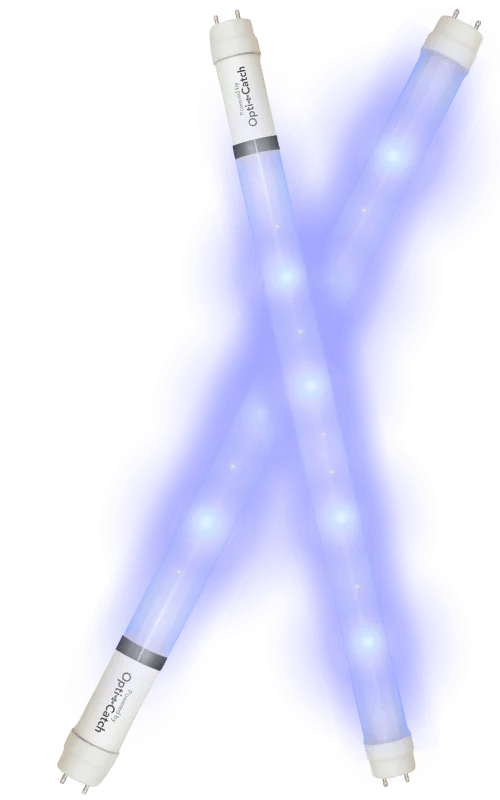


Why Diffused LED Lamps Can Improve Fly Catch in Insect Light Traps
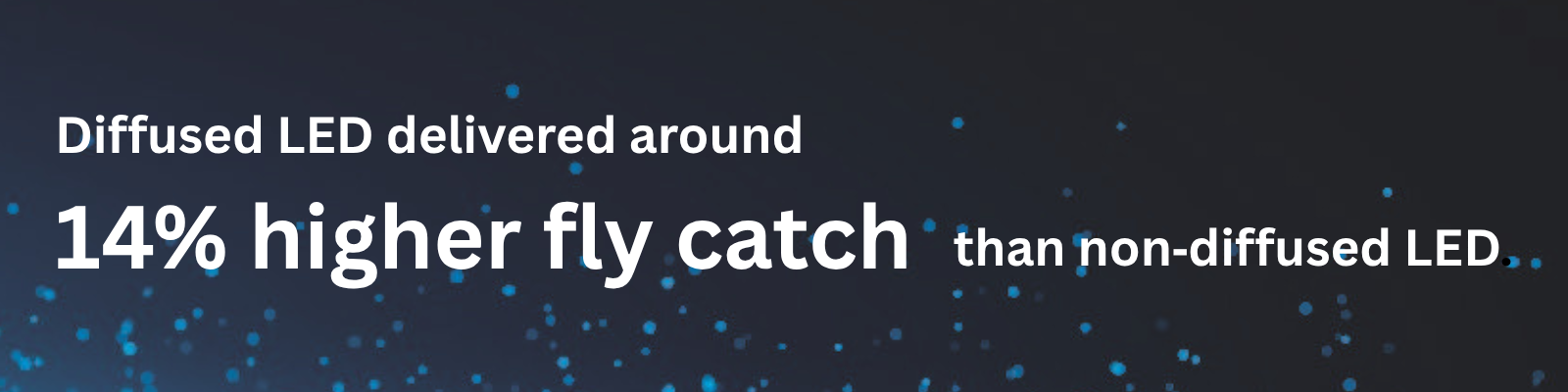
Not all LED insect light trap lamps perform equally. Independent testing by i2L Research found that diffused UV LED lamps delivered around 14% higher fly catch than non-diffused alternatives.
This blog explains how diffusion creates a broader, more even attractant field and why this improves fly catch consistency
.png)
More and more organisations are upgrading from fluorescent to LED insect light traps – but does every type of LED lamp perform equally well at catching flies?
Does the type of LED lamp really make a difference to fly catch – or is LED just LED?
From the outside, many LED solutions look similar. But one design choice in particular has a measurable impact on performance:
Whether the LED lamp is diffused or non‑diffused.
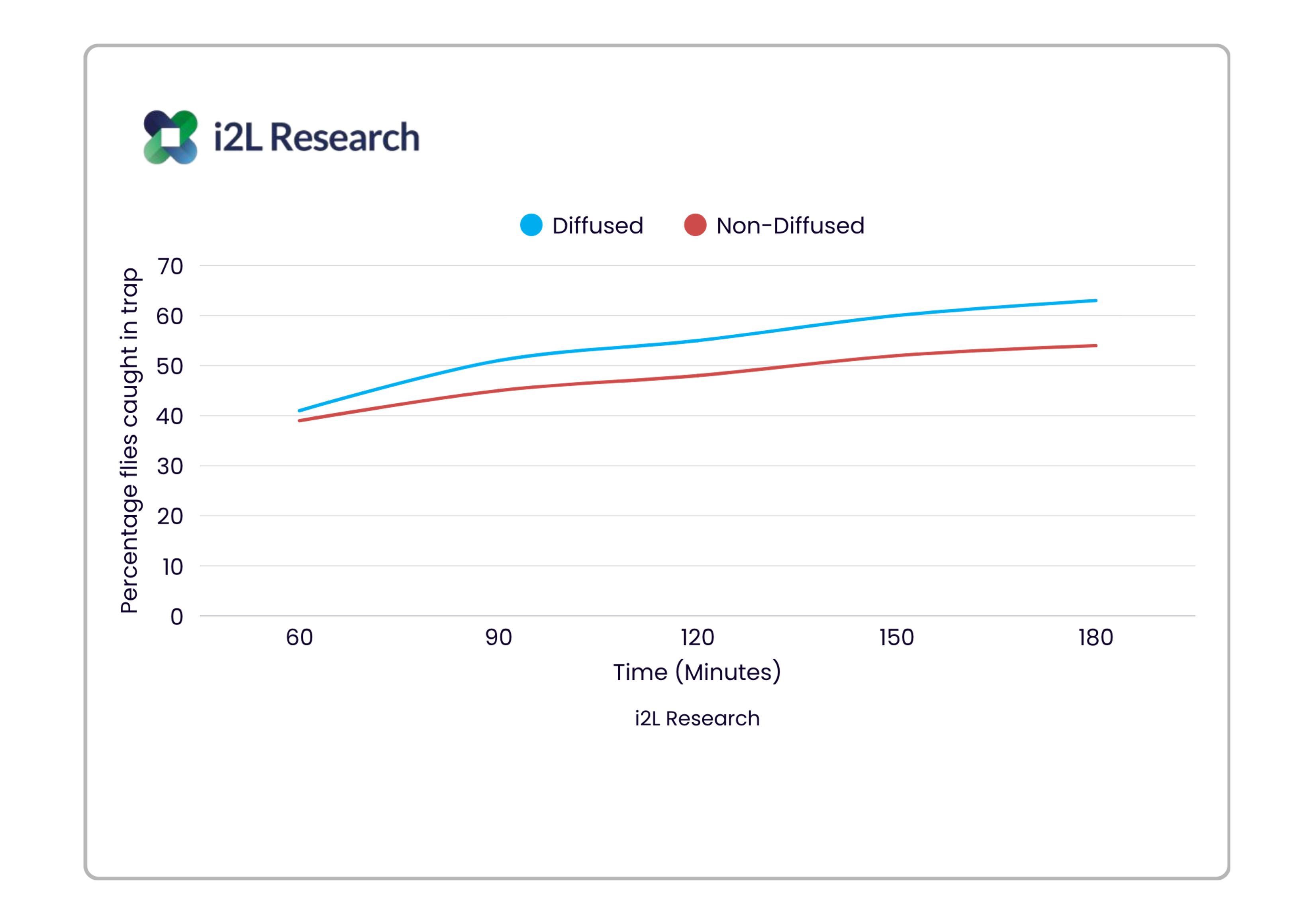
Independent testing by i2L Research found a diffused UV LED light source increased fly catch by around 14% compared to a non‑diffused lamp. That’s a significant uplift when you’re relying on traps to protect food safety and support audits.
This blog explains what “diffused” actually means, why it matters, and what to look for when specifying retrofit LED lamps.
Diffused vs Non‑Diffused LED: What’s the Difference?
When we talk about diffusion in an LED lamp, we’re really talking about how the UV light is spread and softened as it leaves the lamp.
Non‑diffused LED lamps
- You can clearly see individual LED “spots” or chips.
- The light (and UV) output is highly directional – strong beams pointing in specific directions.
Diffused LED lamps
- The LED chips are covered with a diffused coating that softens and spreads the light.
- Instead of seeing harsh points of light, you see a more even, uniform glow.
- The resulting UV field is more similar to a fluorescent lamp, where the light is emitted along the full length of the tube.
Importantly, diffusion changes how the UV is delivered, reshaping it into a broader, more even field so insects encounter a more consistent attractant area around the trap.
The Data: ~14% Increase in Fly Catch
During independent testing with i2L, a diffused Opti-Catch retrofit LED lamp was compared directly against a non‑diffused LED lamp in equivalent insect light trap conditions.
The finding:
Why is this important?
- A 14% uplift is not a marginal gain when you’re managing risk in food environments.
- Over time and across multiple traps, this can significantly improve the overall capture rate of flying insects.
- Better catch performance directly supports your pest management KPIs and audit readiness.
The key point: not all LED lamps are equal. How the light is delivered matters as much as the raw power of the LED chips.
Why Diffusion Improves Fly Attraction
To understand why diffusion helps, it’s useful to think like an insect.
1. Insects don’t fly in a straight line
Non‑diffused lamps concentrate UV into narrow beams. If a fly happens to move exactly through that beam, the attraction is strong. But:
If the insect is slightly above, below, or to the side, the effective UV exposure can drop quickly.
This creates a situation where attraction is strong in a narrow corridor, but weaker elsewhere in the trap’s coverage area.
2. Diffusion spreads UV where flies are actually flying
Diffused lamps, especially in a cylindrical form factor, emit UV more evenly in all directions:
- The UV is distributed across a wider volume of air, not just pushed forward in a tight cone.
- Flies approaching from different angles and heights are still exposed to a strong attractant field.
- This improves the consistency of catch – you’re not dependent on flies crossing a narrow beam at just the right point.
3. A more “natural” visual attractant
Diffused LED also:
- Mimics the more continuous, even glow of traditional fluorescent lamps.
- May present a more natural and uniform cue for flying insects, as highly directional beams of intense light.
While insects perceive light differently from humans, the principles of coverage, distribution, and visibility still apply: a well‑distributed UV field is more likely to intercept insects before they reach product or sensitive areas.
What to Ask Your Supplier About Diffusion
When you’re specifying or reviewing retrofit LED for insect traps, it’s worth asking a few targeted questions:
1. Is the LED lamp diffused or non‑diffused?
Ask for a clear description of the optical design – not just the wattage.
2. Do you have comparative fly‑catch data?
Specifically request data comparing:
- Your chosen LED lamp vs fluorescent
- Diffused vs non‑diffused options, if available
3. Is the lamp form factor cylindrical or point-source?
A cylindrical, diffused lamp tends to give more even coverage around the trap.
Highly directional designs may need more careful positioning to achieve the same area coverage.
4. How does diffusion interact with shatterproof coatings?
For food sites, you’ll typically want a glass‑bodied LED with FEP coating that:
- Provides shatter protection, and
- Delivers the diffused UV field that supports higher catch performance.
If a supplier can’t provide clarity on these points – especially around performance data – it’s a signal to probe further before committing.
Diffusion in the Bigger Picture: Energy, Safety, and Compliance
Diffusion isn’t the only factor in choosing the right LED solution, but it’s an important one alongside:
- Energy performance - Retrofit LED lamps offer up to 66% energy savings vs fluorescent.
- Product lifetime - LED lamps are validated for longer lifecycles (e.g. three years) when supported by manufacturer data.
- Food-safe design - A glass lamp with an FEP coating is a safer option for food sites over plastic-bodied lamps, which can degrade under UV.
- Trap compatibility and control gear - Ensure the LED solution is compatible with your existing traps and ballasts.
Diffusion sits at the intersection of performance and practicality: it helps you get the most out of your LED investment by supporting strong, consistent fly catch in real‑world conditions.
Talk to Us About Diffused Retrofit LED and UV Performance
If you’re reviewing LED options and want to understand how diffused retrofit LED could improve fly catch in your specific environments, our team can help.
We can share more detail on:
- How Opti‑Catch uses diffusion to deliver a more uniform UV field
- Comparative data on fly catch vs non‑diffused LED and fluorescent
- How UV output is maintained over the full lifecycle of the lamp
We’ll also help you consider diffusion alongside other critical factors – from food safety and BRCGS expectations to energy savings and waste reduction.
Get in touch with our team to discuss your current traps, sites, and pest pressures, and we’ll help you identify the most effective retrofit LED approach for your business.
More blogs
When You Buy an LED Insect Light Trap, What Are You Really Buying?
%20(1).png)
From Packaging to Pest Control: Why Risk Assessment Matters
.png)
Electric Fly Killer Standards: Why Pest Controllers Need Greater Transparency
Want to keep your insect traps with Opti-Catch?
Fill out the contact form below to enquire