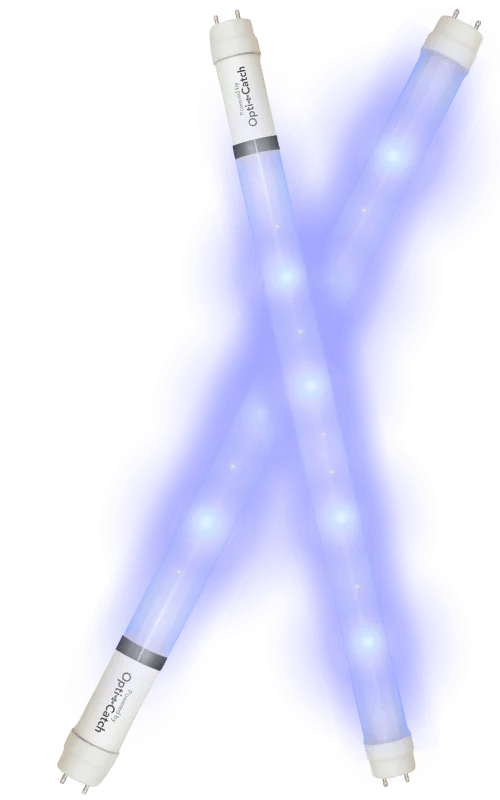


What Happens If an Insect Light Trap Lamp Breaks?
And Why It Matters in Food Environments
This article explores the risks of glass contamination, how shatter-resistant coatings help manage breakage incidents, and the practical steps businesses can take to support food safety and compliance.
.png)
In food production environments, even small risks can have serious consequences. Glass contamination is one of them, and it must be carefully managed across all potential sources, including insect light traps.
These units are a common and effective part of flying insect control. But like any system that uses glass components, they introduce a question that’s worth addressing clearly:
What actually happens if a lamp breaks, and how can that risk be managed?
Understanding the Risk
Traditional fluorescent insect light trap lamps are made from glass. In the event of breakage, multiple shards can be released into the surrounding area.
In food environments, that presents two challenges:
- Contamination risk – even small fragments can be difficult to detect
- Operational disruption – affected areas may need to be isolated, cleaned, and inspected
Breakage can occur, and it’s something that food safety standards, including BRCGS, expect sites to consider and mitigate.
Why Coatings Are Used
To reduce this risk, many lamps are fitted with a protective coating, commonly FEP (fluorinated ethylene propylene).
This coating is designed to:
- Contain glass fragments if the lamp breaks
- Hold shards together, rather than allowing them to disperse
- Support safer clean-up and reduce the risk of contamination spreading
Importantly, this doesn’t make the lamp unbreakable. Instead, it changes how the glass behaves on impact.
What Happens in Practice?
When a coated lamp breaks, the difference is not always dramatic, but it is significant.
Instead of shattering outward, the coating keeps the lamp intact by holding any fragments inside the sleeve.
In practical terms, this means:
- No loose shards entering the environment
- A more controlled clean-up process
- Eliminated risk of glass travelling beyond the immediate area
This added layer of protection helps reduce the risk of glass contamination in the event of a breakage.
See what happens in one of standard drop-tests to test every batch of FEP coated lamps we produce:
Glass vs Plastic: Why It’s Not Just About Breakage
Plastic is sometimes marketed as a way to reduce the risk of glass. However, in insect light traps, the choice of material also affects lamp performance.
Glass remains widely used because it:
- Allows consistent UV transmission
- Supports stable, predictable performance over time
Coated glass lamps aim to balance both priorities:
- Maintain effective UV output
- Reduce the impact of breakage if it occurs
For a more detailed comparison, see our guide: Glass vs Plastic UV Lamps: Why FEP-Coated Glass Is the Food-Safe Choice, which examines the limitations of plastic lamps and the reasons FEP-coated glass remains the food-safe choice.
A Practical Approach to Risk Management
For food manufacturers, the goal isn’t to eliminate every possible risk - it’s to understand, assess, and control it appropriately.
When it comes to insect light traps, that typically means:
- Using lamps designed for food environments (e.g., shatter-resistant coatings)
- Positioning units away from exposed product where possible
- Including them in routine inspection and maintenance schedules
These are straightforward steps that make a meaningful difference when considered as part of a wider pest control and food safety strategy.
Supporting Compliance with Confidence
Standards such as BRCGS don’t prescribe specific products, but they do require that risks like glass and plastic contamination are properly managed, and that effective insect control systems are in place.
Using coated lamps is one way to demonstrate that consideration has been given to:
- Potential hazards
- Preventative measures
- Practical control of breakage scenarios
It’s not about overengineering a solution - it’s about making informed, proportionate choices.
Summary
Insect light traps play an important role in maintaining hygiene standards in food environments. The materials used within them are part of that conversation.
The risk of lamp breakage, whether glass or plastic, should always be considered as a foreign-body risk in hygiene-critical environments.
With the right design approach for insect trap lamps, it’s possible to:
- Maintain effective insect control
- Reduce the impact of breakage
- Support a more robust food safety strategy overall
And often, it’s these small, considered details that make the biggest difference in practice.
More blogs
When You Buy an LED Insect Light Trap, What Are You Really Buying?
%20(1).png)
From Packaging to Pest Control: Why Risk Assessment Matters
.png)
Electric Fly Killer Standards: Why Pest Controllers Need Greater Transparency
Want to keep your insect traps with Opti-Catch?
Fill out the contact form below to enquire