

When You Buy an LED Insect Light Trap, What Are You Really Buying?
The trap?
Or a long-term relationship with one supplier?
At first glance, it might seem like an unusual question, but the purchasing decisions you make today could shape your freedom of choice for years to come.
.png)
When you're choosing an LED insect light trap, your focus is likely to be on factors such as performance, energy consumption, ease of servicing and overall cost.
They're all important considerations.
But as the pest control industry continues its transition to LED technology, there may be another factor that's just as important—one that isn't always obvious at the point of purchase.
Because in some cases, you're not simply investing in an insect light trap.
You're also committing to the servicing model that comes with it.
The Hidden Commitment
Imagine you're buying a new office printer.
It performs well, is competitively priced, and meets your needs. But when the ink runs out, you discover it only accepts one manufacturer's cartridges.
At first, that's not a problem. But what if prices increase, supply becomes limited, or a better alternative comes onto the market? Your freedom to choose has gone because you're tied to one supplier.
The same principle can apply to some LED insect light traps.
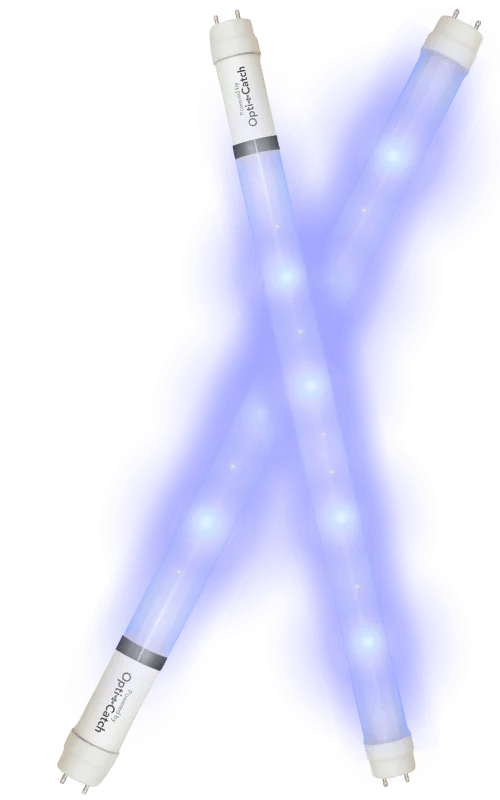
When a trap relies on a proprietary LED light source that can only be replaced by the original manufacturer, you're choosing more than just the trap itself. You're also choosing how it will be serviced, where replacement light sources will come from, and how much flexibility you'll have as LED technology continues to evolve.
That doesn't make proprietary systems the wrong choice. For some pest controllers, they may be exactly the right fit. But it's worth understanding the long-term commitment before making the initial investment.
Because the real question isn't just, "Which trap should I buy?"
It's also, "How much freedom of choice do I want to have once I own it?"
A decision that lasts longer than the installation
Unlike fluorescent lamps, LED light sources are designed to last for 3 years.
That means the purchasing decision you make today could still be influencing your servicing options many years from now.
Before investing in a new LED insect light trap, it may be worth asking yourself:
- Where will I buy replacement LED light sources?
- Will I have the freedom to choose if a better-performing solution becomes available?
- What happens if lead times increase or supply becomes limited?
- Will I be able to compare prices, or will I be reliant on a single supplier?
These aren't questions about today's installation.
They're questions about protecting your future flexibility.
LED technology will continue to evolve
The LED technology available today won't be the LED technology years to come.
As technology advances, it is likely we will see improvements in efficacy, design and our understanding of what attracts flying insects most effectively.
No one can say with certainty what the best-performing LED solution will look like in five or ten years' time.
That's why flexibility matters.
If your insect light traps allow you to choose between different replacement light sources as technology develops, you're free to adopt innovation as it happens-not only when it comes from the original manufacturer.
Who controls the servicing model?
As pest management professionals, your value isn't simply supplying equipment.
It's providing expert advice and recommending the most appropriate solution for each customer.
The more choice you have, the easier it is to make those recommendations based on performance, value and suitability.
When replacement light sources are available from multiple suppliers, you retain the flexibility to compare products, respond to changes in the market and recommend what you genuinely believe is the best option.
When there's only one source, those choices naturally become more limited.
Keeping the choice in your hands
Healthy competition encourages innovation.
It encourages manufacturers to continually improve their products, invest in research and offer better value.
Most importantly, it gives pest controllers the freedom to choose the solutions they believe will deliver the best results for their customers.
As LED technology continues to mature, maintaining that freedom of choice could become increasingly valuable.
Questions worth asking before you buy
Every pest control business will have different priorities.
For some, a proprietary LED system may be exactly the right choice.
For others, maintaining flexibility and future choice may be more important.
The key is understanding the long-term implications before making the investment.
When you're evaluating your next LED insect light trap, ask yourself:
- Am I choosing a trap, or a servicing model?
- Who will supply my replacement LED light sources in the future?
- Will I have the freedom to adopt new technology as it becomes available?
- How much control do I want over the long-term cost and servicing of this equipment?
There isn't a universally right answer.
But there is value in asking the question.
Because when you buy an LED insect light trap, you're not just choosing the technology you'll use today.
You're also deciding how much freedom of choice you'll have in the future.
If you're considering the move to LED, it's also worth understanding why the physical design of the light source matters. Our related blog explores how lamp form factor can influence compatibility, servicing, and performance in insect light traps: Why Universal LED Lamps Matter in Insect Light Traps.
More blogs
%20(1).png)
From Packaging to Pest Control: Why Risk Assessment Matters
.png)
Electric Fly Killer Standards: Why Pest Controllers Need Greater Transparency
.png)
What Happens If an Insect Light Trap Lamp Breaks?
Want to keep your insect traps with Opti-Catch?
Fill out the contact form below to enquire